AI Avatar Free

AI Avatar Free — independent reviews, comparisons, pricing and step-by-step guides on Aizhi.

  • Singularity studies

    Singularity studies

    Singularity studies is an interdisciplinary academic field which examines the idea of technological singularity — the hypothesised point at which artificial intelligence may surpass human intelligence, might be attained by artificial intelligence (AI), robotics, and other technologies and sciences, and its social impacts. In this academic field, the study and research are conducted across a broad array of terrains such as information science, robotics, social informatics, economics, philosophy, and ethics. The primary aim of singularity studies is to gain an integrative understanding of the transformation of social systems occurring in tandem with the explosive evolution of AI and also the changes to be effected by such transformation in the view of humans, ethics, and legal systems. == History == An academic work on technological singurality has appeared in computer science, philosophy, sociology, and law since the early 1990s. Early discussions of an intelligence explosion were popularised by science-fiction writer Vernor Vinge in 1993 and later systematised by futurist Ray Kurzweil. Since the 2010s, universities such as Oxford, Stanford, and Keio have established dedicated programmes, while peer-reviewed journals have begun to publish scenario analyses and policy studies. Ongoing debates question the predictive value of singularity scenarios and warn against a deterministic view of technology. == Characteristics of research == Singularity studies extends beyond mere future predictions and offer an intellectual foundation for proactively designing and creating a desirable future. Principal research themes in this realm include: Ethics of AI; Social implications of technologies; Possibility of harmonious coexistence of humans and AI; Communication with AI; and Redesign of social systems. == Technologists and academics == Vernor Vinge: Propounded the concept of singularity in 1993, making a massive impact on the academic and science-fiction spheres. Ray Kurzweil: Predicted the advent around 2045 of the technological singularity in his 2005 book The Singularity Is Near. Nick Bostrom: Offered philosophical reflections on superintelligence and the risks posed by AI. He is the founding director of the now-dissolved Future of Humanity Institute at the University of Oxford. === Japan === Kento Sasano: A social informatician, AI educator, and inventor. He is the president of the Japan Society of Singularity Studies. == Challenges and outlook == Singularity studies is still evolving as an academic field, and quite a few challenges remain unresolved in regard to the systematization of their theories, research methods, and educational curricula. That said, in this day and age of accelerating technological and societal shifts, interdisciplinary approaches have gained in importance and are drawing much attention in the arenas of scholarly research, intercorporate collaboration, and policy planning.

    Read more →
  • The Best Free AI Coding Assistant for Beginners

    The Best Free AI Coding Assistant for Beginners

    Trying to pick the best AI coding assistant? An AI coding assistant is software that uses machine learning to help you get more done — it scales effortlessly from a single task to thousands. The best picks balance beginner-friendly simplicity with the depth power users need, and they ship updates often. Whether you are a beginner or a pro, the right AI coding assistant slots into your workflow and pays for itself fast. Read on for hands-on impressions, pricing tiers, and the standout features that matter.

    Read more →
  • How to Choose an AI Clip Maker

    How to Choose an AI Clip Maker

    Curious about the best AI clip maker? An AI clip maker is software that uses machine learning to help you get more done — it combines speed, accuracy, and an interface that just works. Hands-on testing shows real-world results vary, so a short free trial is the smartest way to decide. Whether you are a beginner or a pro, the right AI clip maker slots into your workflow and pays for itself fast. This guide breaks down the top picks, their pros and cons, and who each one is best for.

    Read more →
  • P4-metric

    P4-metric

    The P4 metric (also known as FS or Symmetric F ) enables performance evaluation of a binary classifier. The P4 metric is calculated from precision, recall, specificity, and NPV (negative predictive value). The definition of the P4 metric is similar to that of the F1 metric, however the P4 metric definition addresses criticisms leveled against the definition of the F1 metric. The definition of the P4 metric may, therefore, be understood as an extension of the F1 metric. Like the other known metrics, the P4 metric is a function of: TP (true positives), TN (true negatives), FP (false positives), FN (false negatives). == Justification == The key concept of the P4 metric is to leverage the four key conditional probabilities: P ( + ∣ C + ) {\displaystyle P(+\mid C{+})} — the probability that the sample is positive, provided the classifier result was positive. P ( C + ∣ + ) {\displaystyle P(C{+}\mid +)} — the probability that the classifier result will be positive, provided the sample is positive. P ( C − ∣ − ) {\displaystyle P(C{-}\mid -)} — the probability that the classifier result will be negative, provided the sample is negative. P ( − ∣ C − ) {\displaystyle P(-\mid C{-})} — the probability the sample is negative, provided the classifier result was negative. The main assumption behind this metric is that all the probabilities mentioned above are close to 1 for a properly designed binary classifier. Indeed, P 4 = 1 {\displaystyle \mathrm {P} _{4}=1} if, and only if, all of the probabilities above are equal to 1. Another important feature is that P 4 {\displaystyle \mathrm {P} _{4}} tends to zero any of the above probabilities tend to zero. == Definition == P4 is defined as a harmonic mean of four key conditional probabilities: P 4 = 4 1 P ( + ∣ C + ) + 1 P ( C + ∣ + ) + 1 P ( C − ∣ − ) + 1 P ( − ∣ C − ) = 4 1 p r e c i s i o n + 1 r e c a l l + 1 s p e c i f i c i t y + 1 N P V . {\displaystyle \mathrm {P} _{4}={\frac {4}{{\frac {1}{P(+\mid C{+})}}+{\frac {1}{P(C{+}\mid +)}}+{\frac {1}{P(C{-}\mid -)}}+{\frac {1}{P(-\mid C{-})}}}}={\frac {4}{{\frac {1}{\mathit {precision}}}+{\frac {1}{\mathit {recall}}}+{\frac {1}{\mathit {specificity}}}+{\frac {1}{\mathit {NPV}}}}}.} In terms of TP,TN,FP,FN it can be calculated as follows: P 4 = 4 ⋅ T P ⋅ T N 4 ⋅ T P ⋅ T N + ( T P + T N ) ⋅ ( F P + F N ) . {\displaystyle \mathrm {P} _{4}={\frac {4\cdot \mathrm {TP} \cdot \mathrm {TN} }{4\cdot \mathrm {TP} \cdot \mathrm {TN} +(\mathrm {TP} +\mathrm {TN} )\cdot (\mathrm {FP} +\mathrm {FN} )}}.} == Evaluation of the binary classifier performance == Evaluating the performance of binary classifiers is a multidisciplinary concept. It spans from the evaluation of medical tests, psychiatric tests to machine learning classifiers from a variety of fields. Thus, many of the metrics in use exist under several names, some defined independently. == Properties of P4 metric == Symmetry — contrasting to the F1 metric, P4 is symmetrical. It means - it does not change its value when dataset labeling is changed - positives named negatives and negatives named positives. Range: P 4 ∈ [ 0 , 1 ] {\displaystyle \mathrm {P} _{4}\in [0,1]} . Achieving P 4 ≈ 1 {\displaystyle \mathrm {P} _{4}\approx 1} requires all the key four conditional probabilities being close to 1. For P 4 ≈ 0 {\displaystyle \mathrm {P} _{4}\approx 0} it is sufficient that one of the key four conditional probabilities is close to 0. == Examples, comparing with the other metrics == Dependency table for selected metrics ("true" means depends, "false" - does not depend): Metrics that do not depend on a given probability are prone to misrepresentation when the probability approaches 0. === Example 1: Rare disease detection test === Let us consider a medical test used to detect a rare disease. Suppose a population size of 100000 and 0.05% of the population is infected. Further suppose the following test performance: 95% of all positive individuals are classified correctly (TPR=0.95) and 95% of all negative individuals are classified correctly (TNR=0.95). In such a case, due to high population imbalance and in spite of having high test accuracy (0.95), the probability that an individual who has been classified as positive is in fact positive is very low: P ( + ∣ C + ) = 0.0095. {\displaystyle P(+\mid C{+})=0.0095.} We can observe how this low probability is reflected in some of the metrics: P 4 = 0.0370 {\displaystyle \mathrm {P} _{4}=0.0370} , F 1 = 0.0188 {\displaystyle \mathrm {F} _{1}=0.0188} , J = 0.9100 {\displaystyle \mathrm {J} =\mathbf {0.9100} } (Informedness / Youden index), M K = 0.0095 {\displaystyle \mathrm {MK} =0.0095} (Markedness). === Example 2: Image recognition — cats vs dogs === Consider the problem of training a neural network based image classifier with only two types of images: those containing dogs (labeled as 0) and those containing cats (labeled as 1). Thus, the goal is to distinguish between the cats and dogs. Suppose that the classifier overpredicts in favour of cats ("positive" samples): 99.99% of cats are classified correctly and only 1% of dogs are classified correctly. Further, suppose that the image dataset consists of 100000 images, 90% of which are pictures of cats and 10% are pictures of dogs. In this situation, the probability that the picture containing dog will be classified correctly is pretty low: P ( C − | − ) = 0.01. {\displaystyle P(C-|-)=0.01.} Not all metrics are notice this low probability: P 4 = 0.0388 {\displaystyle \mathrm {P} _{4}=0.0388} , F 1 = 0.9478 {\displaystyle \mathrm {F} _{1}=\mathbf {0.9478} } , J = 0.0099 {\displaystyle \mathrm {J} =0.0099} (Informedness / Youden index), M K = 0.8183 {\displaystyle \mathrm {MK} =\mathbf {0.8183} } (Markedness).

    Read more →
  • Autonomous agent

    Autonomous agent

    An autonomous agent is an artificial intelligence (AI) system that can perform complex tasks independently. == Definitions == There are various definitions of autonomous agent. According to Brustoloni (1991): "Autonomous agents are systems capable of autonomous, purposeful action in the real world." According to Maes (1995): "Autonomous agents are computational systems that inhabit some complex dynamic environment, sense and act autonomously in this environment, and by doing so realize a set of goals or tasks for which they are designed." Franklin and Graesser (1997) review different definitions and propose their definition: "An autonomous agent is a system situated within and a part of an environment that senses that environment and acts on it, over time, in pursuit of its own agenda and so as to effect what it senses in the future." They explain that: "Humans and some animals are at the high end of being an agent, with multiple, conflicting drives, multiples senses, multiple possible actions, and complex sophisticated control structures. At the low end, with one or two senses, a single action, and an absurdly simple control structure we find a thermostat." == Agent appearance == Lee et al. (2015) post safety issue from how the combination of external appearance and internal autonomous agent have impact on human reaction about autonomous vehicles. Their study explores the human-like appearance agent and high level of autonomy are strongly correlated with social presence, intelligence, safety and trustworthiness. In specific, appearance impacts most on affective trust while autonomy impacts most on both affective and cognitive domain of trust where cognitive trust is characterized by knowledge-based factors and affective trust is largely emotion driven. == Applications == Agentic AI systems: Advanced AI agents that can scope out projects and complete them with necessary tools, representing a significant evolution from simple task-oriented systems. Internet of things (IoT) Integration: Autonomous agents increasingly interact with IoT devices, enabling smart home systems, industrial monitoring, and urban infrastructure management. Collaborative software development: Tools like Cognition AI's Devin aim to create autonomous software engineers capable of complex reasoning, planning, and completing engineering tasks requiring thousands of decisions. Enterprise automation: Business process automation platforms like Salesforce's Agentforce provide autonomous bots for various service functions. == Challenges and considerations == Uncertainty and incomplete information: Autonomous agents must make decisions with limited or uncertain information about their environment and future states. Integration complexity: Incorporating autonomous agents into existing systems and workflows can be technically challenging and resource-intensive. Scalability: As systems become more complex and more agents are used, maintaining coordination and avoiding conflicts becomes increasingly difficult. Trust: Research has shown the combination of external appearance and internal autonomous capabilities significantly impacts human reactions and trust. Lee et al. (2015) found that human-like appearance and high levels of autonomy are strongly correlated with social presence, intelligence, safety, and trustworthiness perceptions. Specifically, appearance impacts affective trust most significantly, while autonomy affects both affective and cognitive trust domains, where affective trust is emotionally driven, and cognitive trust is characterized by knowledge-based factors. Vulnerability to manipulation: Researchers from Harvard, MIT and other educational institutions found that AI agents could become vulnerable to manipulation and could perform detrimental actions in the process of being helpful. == Ethical and regulatory concerns == Accountability: Determining responsibility when autonomous agents make incorrect or harmful decisions remains a complex issue. Privacy and security: autonomous agents often require access to sensitive data, raising concerns about data protection and system security.

    Read more →
  • Bidyut Baran Chaudhuri

    Bidyut Baran Chaudhuri

    Bidyut Baran Chaudhuri (B. B. Chauduri) is a senior computer scientist and an emeritus professor of Techno India University in West Bengal, India. He is also adjuncted to Indian Statistical Institute, where he was a professor for about three decades. He was the founding Head of Computer Vision and Pattern Recognition Unit (which was established in 1994) of ISI. Moreover, he was a J.C. Bose Fellow and Indian National Academy of Engineering Distinguished Professor at ISI. He was the vice-president of the Society for Natural Language Technology Research (SNLTR). His primary research contributes to the fields of computer vision, image processing and pattern recognition. He is a pioneer of "Indian language script OCR". == Education == Chaudhuri received his BSc (Hons.), BTech and MTech degrees from University of Calcutta, India in 1969, 1972 and 1974, respectively and PhD Degree from Indian Institute of Technology Kanpur in 1980. He did his post-doc work during 1981-1982 from Queen's University, U.K, through Leverhulme Overseas Fellowship. He also worked as a visiting faculty at Tech University, Hannover during 1986-87 as well as at GSF Institute of Radiation Protection (now Leibnitz Institute), Munich in 1990 and 1992. == Awards and recognition == Chaudhuri has been elected as a Life Fellow of IEEE "for contributions to pattern recognition, especially Indian language script OCR, document processing and natural language processing". He has become a Fellow of International Association for Pattern Recognition (IAPR) "for contributions to character recognition and speech synthesis in Indian language". He is also Fellow of The World Academy of Sciences (TWAS), Indian National Science Academy (INSA), Indian National Academy of Engineering (INAE), National Academy of Sciences (NASI), and Institute of Electronics and Telecommunication Engineering (IETE). In 2011, Chaudhuri received the Om Prakash Bhasin Award for his contribution in the field of electronics and information technology. Chaudhuri's interview on some of his works has been reported in Indian newspaper as well. He is within world's top 2% scientists and top-10 Indian AI scientists according to a study conducted by Stanford University. He has also been featured as top-10 machine learning researcher from India.

    Read more →
  • How to Choose an AI Paragraph Rewriter

    How to Choose an AI Paragraph Rewriter

    Comparing the best AI paragraph rewriter? An AI paragraph rewriter is software that uses machine learning to help you get more done — it lowers the barrier so anyone can produce professional output. Privacy matters too: check whether your data trains the model and whether a no-log or enterprise tier is available. Whether you are a beginner or a pro, the right AI paragraph rewriter slots into your workflow and pays for itself fast. Below we compare features, pricing, and real output so you can choose with confidence.

    Read more →
  • Theano (software)

    Theano (software)

    Theano is a Python library and optimizing compiler for manipulating and evaluating mathematical expressions, especially matrix-valued ones. In Theano, computations are expressed using a NumPy-esque syntax and compiled to run efficiently on either CPU or GPU architectures. == History == Theano is an open source project primarily developed by the Montreal Institute for Learning Algorithms (MILA) at the Université de Montréal. The name of the software references the ancient philosopher Theano, long associated with the development of the golden mean. On 28 September 2017, Pascal Lamblin posted a message from Yoshua Bengio, Head of MILA: major development would cease after the 1.0 release due to competing offerings by strong industrial players. Theano 1.0.0 was then released on 15 November 2017. On 17 May 2018, Chris Fonnesbeck wrote on behalf of the PyMC development team that the PyMC developers will officially assume control of Theano maintenance once the MILA development team steps down. On 29 January 2021, they started using the name Aesara for their fork of Theano. On 29 Nov 2022, the PyMC development team announced that the PyMC developers will fork the Aesara project under the name PyTensor. == Sample code == The following code is the original Theano's example. It defines a computational graph with 2 scalars a and b of type double and an operation between them (addition) and then creates a Python function f that does the actual computation. == Examples == === Matrix Multiplication (Dot Product) === The following code demonstrates how to perform matrix multiplication using Theano, which is essential for linear algebra operations in many machine learning tasks. === Gradient Calculation === The following code uses Theano to compute the gradient of a simple operation (like a neuron) with respect to its input. This is useful in training machine learning models (backpropagation). === Building a Simple Neural Network === The following code shows how to start building a simple neural network. This is a very basic neural network with one hidden layer. === Broadcasting in Theano === The following code demonstrates how broadcasting works in Theano. Broadcasting allows operations between arrays of different shapes without needing to explicitly reshape them.

    Read more →
  • Open-source robotics

    Open-source robotics

    Open-source robotics is a branch of robotics where robots are developed with open-source hardware and free and open-source software, publicly sharing blueprints, schematics, and source code. It is thus closely related to the open design movement, the maker movement and open science. == Requirements == Open source robotics means that information about the hardware is easily discerned, so that others can easily rebuild it. In turn, this requires design to use only easily available standard subcomponents and tools, and for the build process to be documented in detail including a bill of materials and detailed ('Ikea style') step-by-step building and testing instructions. (A CAD file alone is not sufficient, as it does not show the steps for performing or testing the build). These requirements are standard to open source hardware in general, and are formalised by various licences, certifications, especially those defined by the peer-reviewed journals Journal of Open Hardware and HardwareX. Licensing requirements for software are the same as for any open source software. But in addition, for software components to be of practical use in real robot systems, they need to be compatible with other software, usually as defined by some robotics middleware community standard. == Hardware systems == Applications to date include: Robot arms, e.g. PARA or Thor Wheeled mobile robots. e.g. OpenScout Four-legged robots such as the Open Dynamic Robot Initiative UAV quadcopters (drones) such as Agilicious Humanoid robots, e.g. iCub, Berkeley Humanoid Lite Self-driving cars, e.g. OpenPodcar (→ Personal rapid transit) Submersible robots, eg. OpenFish Laboratory robotics such as chemical liquid handling Vertical farming Swarm robots, e.g. HeRoSwarm Domestic tasks: vacuum cleaning, floor washing and grass mowing Robot sports including robot combat and autonomous racing Education == Hardware subcomponents == Most open source hardware definitions allow non-open subcomponents to be used in modular design, as long as they are easily available. However many designs try to push openness down into as many subcomponents as possible, with the aim of ultimately reaching fully open designs. Open hardware manual-drive vehicles and their subcomponents, such as from Open Source Ecology, are often used as starting points and extended with automation systems. Open subcomponents can include open-source computing hardware as subcomponents, such as Arduino and RISC-V, as well as open source motors and drivers such as the Open Source Motor Controller and ODrive. Open hardware robotics interface boards can simplify interfacing between middleware software and physical hardware. == Software subcomponents == === Middleware === Robotics middleware is software which links multiple other software components together. In robotics, this specifically means real-time communication systems with standardized message passing protocols. The predominant open source middleware is ROS2, the robot operating system, now as version 2. Other alternatives include ROS1, YARP — used in the iCub, URBI, and Orca. Open source middleware is usually run on an open source operating system, especially the Ubuntu distribution of Linux. === Driver software === Most robot sensors and actuators require software drivers. There is little standardization of open source software at this level, because each hardware device is different. Creating open drivers for closed hardware is difficult as it requires both low level programming and reverse engineering. === Simulation software === Open source robotics simulators include Gazebo, MuJoCo and Webots. Open source 3D game engines such as Godot are also sometimes used as simulators, when equipped with suitable middleware interfaces. === Automation software === At the level of AI, many standard algorithms have open source software implementations, mostly in ROS2. Major components include: Machine vision systems such as the YOLO object detector. 3D photogrammetry Navigation including SLAM and planning such as nav2 Arm inverse kinematics such as moveIt2 == Community == The first signs of the increasing popularity of building and sharing robot designs were found with the maker culture community. What began with small competitions for remote operated vehicles (e.g. Robot combat), soon developed to the building of autonomous telepresence robots such as Sparky and then true robots (being able to take decisions themselves) as the Open Automaton Project. Several commercial companies now also produce kits for making simple robots. The community has adopted open source hardware licenses, certifications, and peer-reviewed publications, which check that source has been made correctly and permanently available under community definitions, and which validate that this has been done. These processes have become critically important due to many historical projects claiming to be open source but them reverting on the promise due to commercialisation or other pressures. As with other forms of open source hardware, the community continues to debate precise criteria for 'ease of build'. A common standard is that designs should be buildable by a technical university student, in a few days, using typical fablab tools, but definitions of all of these subterms can also be debated. Compared to other forms of open source hardware, open source robotics typically includes a large software element, so involves software as well as hardware engineers. Open source concepts are more established in open source software than hardware, so robotics is a field in which those concepts can be shared and transferred from software to hardware. While the community in open source robotics is multi-faceted with a wide range of backgrounds, a sizable sub-community uses the ROS middleware and meets at the ROSCon conferences to discuss development of ROS itself and automation components built on it.

    Read more →
  • Karl Steinbuch

    Karl Steinbuch

    Karl W. Steinbuch (June 15, 1917 in Stuttgart-Bad Cannstatt – June 4, 2005 in Ettlingen) was a German computer scientist, cyberneticist, and electrical engineer. He was an early and influential researcher in German computer science, and was the developer of the Lernmatrix, an early implementation of artificial neural networks. From the late 1960s onwards the focus of his activity shifted from scientific research to right-wing political activism supporting the Neue Rechte. == Biography == Steinbuch joined the National Socialist German Students' League (NSDStB) and the Nazi Party. Steinbuch studied at the University of Stuttgart and in 1944 he received his PhD in physics. In 1948 he joined Standard Elektrik Lorenz (SEL, part of the ITT group) in Stuttgart, as a computer design engineer and later as a director of research and development, where he filed more than 70 patents. Steinbuch completed the first European fully transistorized computer, the ER 56 marketed by SEL. In 1958 he became professor and director of the Institute of Technology for information processing (ITIV) of the University of Karlsruhe, where he retired in 1980. In 1967 he began publishing books, in which he tried to influence German education policy. Together with books from colleagues like Jean Ziegler from Switzerland, Eric J. Hobsbawm from the UK, and John Naisbitt his books predicted what he regarded as the coming education disaster of the emerging civic lobby society. In 1957, together with Helmut Gröttrup, Steinbuch coined the term Informatik, the German word for computer science, which gave informatics, and the term kybernetische Anthropologie. == Awards and recognition == Wilhelm-Boelsche award - medal in Gold German non-fiction book award Gold medal award of the XXI. International Congresses on Aerospace Medicine Konrad Adenauer award of science Jakob Fugger award medal Medal of merit of the state of Baden-Wuerttemberg member, German Academy of Sciences Leopoldina member, International Academy of Science, Munich. grants from a state government grants program, named "Karl-Steinbuch-Stipendium" Steinbuch Centre for Computing at the Karlsruhe Institute of Technology named after him == Books == Steinbuch wrote several books and articles, including: 1957 Informatik: Automatische Informationsverarbeitung ("Informatics: automatic information processing"). 1963 Learning matrices and their applications (together with U. A. W. Piske) 1965 A critical comparison of two kinds of adaptive classification networks (together with Bernard Widrow) 1966 (1969): Die informierte Gesellschaft. Geschichte und Zukunft der Nachrichtentechnik (The informed society. History and Future of telecommunications) 1989: Die desinformierte Gesellschaft (The disinformed society) 1968: Falsch programmiert. Über das Versagen unserer Gesellschaft in der Gegenwart und vor der Zukunft und was eigentlich geschehen müßte. (as a bestseller listet in: Der Spiegel) (Programmed falsely. About our society's failure in the present and with respect to the future and what should be done.) 1969: Programm 2000. (as a bestseller listet in: Der Spiegel) 1971: Automat und Mensch. Auf dem Weg zu einer kybernetischen Anthropologie (Machine and Man. On the way to a cybernetic anthropology; 4th revised edition) 1971: Mensch Technik Zukunft. Probleme von Morgen (German non-fiction book award) (Man Technology Future. Problems of Tomorrow) 1973: Kurskorrektur (Correcting the Course) 1978: Maßlos informiert. Die Enteignung des Denkens (Excessively informed. The Deprivation of Thinking) 1984: Unsere manipulierte Demokratie. Müssen wir mit der linken Lüge leben? (Our Thought-controlled Democracy. Do we have to live with the leftist lie?)

    Read more →
  • Dilek Hakkani-Tür

    Dilek Hakkani-Tür

    Dilek Z. Hakkani-Tür is a Turkish-American computer scientist focusing on speech processing, speech recognition, and dialogue systems. She is a professor of computer science at the University of Illinois Urbana-Champaign. == Education and career == Hakkani-Tür is a 1994 graduate of Middle East Technical University in Ankara, Turkey. She continued her studies at Bilkent University, also in Ankara, where she earned a master's degree in 1996 and completed her Ph.D. in 2000. She worked as a researcher at AT&T Labs from 2001 to 2005, at the International Computer Science Institute from 2006 to 2010, at Microsoft Research from 2010 to 2016, at Google Research from 2016 to 2018, and at Amazon Alexa from 2018 to 2023. At Microsoft, she was in the team of scientists that built the first prototype of the Cortana virtual assistant. While working for Amazon Alexa, she also taught at the University of California, Santa Cruz as a distinguished visiting instructor. She joined the University of Illinois Urbana-Champaign faculty in 2023. She was editor-in-chief of IEEE/ACM Transactions on Audio, Speech and Language Processing from 2019 to 2021, and is president of the Special Interest Group on Discourse and Dialogue of the Association for Computational Linguistics for the 2023–2025 term. She has served as co-editor-in-chief of Transactions of the Association for Computational Linguistics since 2024. == Recognition == In 2014, Hakkani-Tür was elected as an IEEE Fellow "for contributions to spoken language processing", and as a Fellow of the International Speech Communication Association "for contributions to advancing the state-of-the-art in spoken language processing, especially for human/human and human/machine conversational understanding". In 2024, she was elected as a Fellow of the Association for Computational Linguistics for her contributions to spoken dialogue systems.

    Read more →
  • Is an AI Video Editor Worth It in 2026?

    Is an AI Video Editor Worth It in 2026?

    Shopping for the best AI video editor? An AI video editor is software that uses machine learning to help you get more done — it keeps getting smarter as the underlying models improve. Pricing, accuracy, and the size of the model behind the tool are the three factors that most affect daily usefulness. Whether you are a beginner or a pro, the right AI video editor slots into your workflow and pays for itself fast. We tested the leading options and ranked them by quality, value, and ease of use.

    Read more →
  • Artificial intelligence in education

    Artificial intelligence in education

    Artificial intelligence in education (often abbreviated as AIEd) is a subfield of educational technology that studies how to use artificial intelligence to create learning environments. Considerations in the field include data-driven decision-making, AI ethics, data privacy and AI literacy. Concerns include the potential for cheating, over-reliance, equity of access, reduced critical thinking, and the perpetuation of misinformation and bias. == History == Efforts to integrate AI into educational contexts have often followed technological advancement in the history of artificial intelligence. In the 1960s, educators and researchers began developing computer-based instruction systems, such as PLATO, developed by the University of Illinois. In the 1970s and 1980s, intelligent tutoring systems (ITS) were being adapted for classroom instruction. The International Artificial Intelligence in Education Society was founded in 1993. Coinciding with the AI boom of the 2020s, the use of large language models in the global north has been promoted and funded by venture capital and big tech. Companies creating AI services have targeted students and educational institutions as customers. Similarly, pre-AI boom educational companies have expanded their use of AI technologies. These commercial incentives for AIEd use may be related to a potential AI bubble. In the U.S., bipartisan support of AI development in K-12 education has been expressed, but specific implementations and best practices remain contentious. == Theory == AIEd applies theory from education studies, machine learning, and related fields. A 2019 review of the previous decade of studies found that most research prioritized technological design over pedagogical integration. Ouyang and Jiao (2021) propose three paradigms for AI in education, which follow roughly from least to most learner-centered and from requiring least to most technical complexity from the AI systems: AI-directed, learner-as-recipient: AIEd systems present a pre-set curriculum based on statistical patterns that do not adjust to learner's feedback. AI-supported, learner-as-collaborator: Systems that incorporate responsiveness to learner's feedback through, for example, natural language processing, wherein AI can support knowledge construction. AI-empowered, learner-as-leader: This model seeks to position AI as a supplement to human intelligence wherein learners take agency and AI provides consistent and actionable feedback. Some scholars place AI in education within a socio-technical framework. This positions AI alongside other emerging educational technologies, such as computing, the internet, and social media. The framework of Tsao, Heinrichs and Camit (2025) draws on new materialism and posthumanism, specifically Donna Haraway's concept of sympoiesis (making-with). This perspective views learning as an entanglement of human and non-human actors (students, teachers, and AI algorithms), where knowledge is co-composed in contact zones between human context and algorithmic prediction. AI agents have been trained on biased datasets, and thus continue to perpetuate societal biases. Since LLMs were created to produce human-like text, algorithmic bias can be introduced and reproduced. AI's data processing and monitoring reinforce neoliberal approaches to education rather than addressing inequalities. == Applications == Uses of generative AI chatbots in education have included assessment and feedback, machine translations, proof-reading exam question generation and copy editing, or as virtual assistants. Emotional AI in education is the study and development of systems that can detect learners' emotions or provide emotional support in learning. == Usage == === Schools and educators === Following the release of ChatGPT in November 2022, some schools and large school districts blocked access to the site and issued warnings that the use of such tools would be seen as cheating. Governmental and non-governmental organizations such as UNESCO, Article 4 of the European Union's AI Act, and the U.S. Department of Education have published reports advocating for specific AIEd approaches. National higher-education bodies have also published guidance on generative AI, including Ireland's Higher Education Authority, which issued a policy framework for higher education teaching and learning in December 2025. In 2024, UNESCO released updated global guidance for generative AI in education, emphasizing ethical use, teacher training, and data protection to ensure responsible integration of AI tools in learning environments. According to Taso (2025), policy implementation in higher education is interpreted and enacted differently by various organizations. These decentralized policies can lead to inconsistent enforcement and confusion among students regarding what constitutes acceptable use, with the burden of ethical navigation falling on individual teachers and students. AI integration in classrooms has created new forms of invisible labour for educators, who must navigate ambiguous policies, redesign assessments to be AI-resilient, and adjudicate potential academic integrity violations. The use of AI detection tools has also been criticised for creating an adversarial relationship between students and institutions, where students may be falsely accused of misconduct based on probabilistic software. AIEd advocates say that efforts should be made towards increasing global accessibility and training educators to serve underprivileged areas. === Students === Reliance on generative AI has been linked with reduced academic self-esteem and performance, and heightened learned helplessness. Algorithm errors and hallucinations are common flaws in AI agents, making them less trustworthy and reliable. According to a 2025 survey from Inside Higher Ed, 85% of higher education students use generative AI technology in some way, with 25% using AI to complete assignments for them. The most common reason cited for using AI to cheat was pressure to get high grades. 97% of students wanted some form of action from schools on the threat to academic integrity caused by AI, with the most popular options being clearer policies and more education about ethical uses of AI. In September 2025, The Atlantic published an op-ed from a high school senior arguing that the normalization of AI cheating was eroding critical thinking, academic integrity, creativity, and the shared student experience.

    Read more →
  • Stephen Muggleton

    Stephen Muggleton

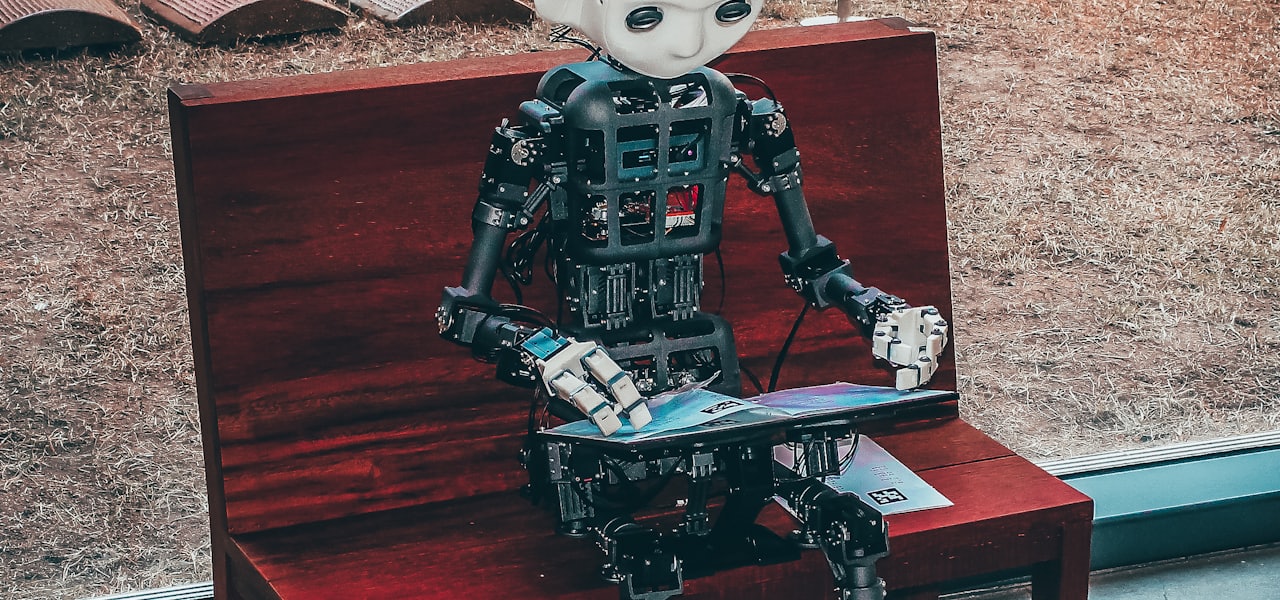
    Stephen H. Muggleton (born 6 December 1959, son of Louis Muggleton) is Professor of Machine Learning and Head of the Computational Bioinformatics Laboratory at Imperial College London. == Education == Muggleton received his Bachelor of Science degree in computer science (1982) and Doctor of Philosophy in artificial intelligence (1986) supervised by Donald Michie at the University of Edinburgh. == Career == Following his PhD, Muggleton went on to work as a postdoctoral research associate at the Turing Institute in Glasgow (1987–1991) and later an EPSRC Advanced Research Fellow at Oxford University Computing Laboratory (OUCL) (1992–1997) where he founded the Machine Learning Group. In 1997 he moved to the University of York and in 2001 to Imperial College London. From 2025, Muggleton has joined Nanjing University as a full-time professor. == Research == Muggleton's research interests are primarily in Artificial intelligence. From 1997 to 2001 he held the Chair of Machine Learning at the University of York and from 2001 to 2006 the EPSRC Chair of Computational Bioinformatics at Imperial College in London. Since 2013 he holds the Syngenta/Royal Academy of Engineering Research Chair as well as the post of Director of Modelling for the Imperial College Centre for Integrated Systems Biology. He is known for founding the field of Inductive logic programming. In this field he has made contributions to theory introducing predicate invention, inverse entailment and stochastic logic programs. He has also played a role in systems development where he was instrumental in the systems Duce, Cigol, Golem, Progol and Metagol and applications – especially biological prediction tasks. He worked on a Robot Scientist together with Ross D. King that is capable of combining Inductive Logic Programming with active learning. His present work concentrates on the development of Meta-Interpretive Learning, a new form of Inductive Logic Programming which supports predicate invention and learning of recursive programs.

    Read more →
  • Gato (DeepMind)

    Gato (DeepMind)

    Gato is a deep neural network for a range of complex tasks that exhibits multimodality. It can perform tasks such as engaging in a dialogue, playing video games, controlling a robot arm to stack blocks, and more. == Overview == Gato was created by researchers at London-based AI firm DeepMind. It is a transformer, like GPT-3. According to MIT Technology Review, the system "learns multiple different tasks at the same time, which means it can switch between them without having to forget one skill before learning another" whereas "[t]he AI systems of today are called “narrow,” meaning they can only do a specific, restricted set of tasks such as generate text", and according to The Independent, it is a "'generalist agent' that can carry out a huge range of complex tasks, from stacking blocks to writing poetry". It uses supervised learning with 1.2B parameters. The technology has been described as "general purpose" artificial intelligence and a "step toward" artificial general intelligence.

    Read more →